
MIG/MAG, spot and other welding processes can require different tooling, power sources and cell layouts. Confirm the process and weld quality requirements before selecting a robot.
ROBOT APPLICATIONS
Robotic Welding Automation
Plan the process before selecting a model.
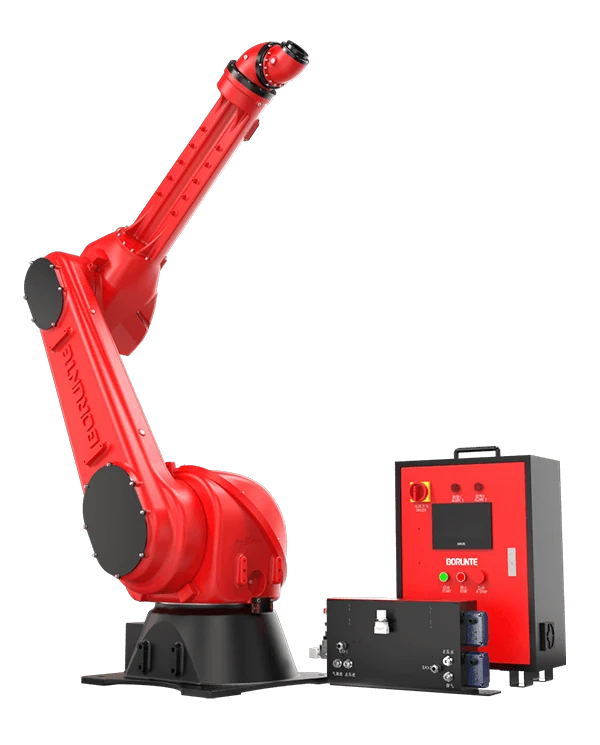
01APPLICATION OVERVIEW
Design around the complete process.
A welding robot is only one part of a repeatable welding process. The cell also needs an appropriate welding source, torch or gun, workholding, access for loading and inspection, and a safety design matched to the site.
Single or multiple part numbers affect fixture changeover, programming and the number of stations needed. Explain how operators will load, unload and inspect each part.
Reach, payload and positioner movement need to be considered together with the torch, cables, part envelope and access to every joint. Catalogue payload alone does not define a complete cell.
02PROJECT BRIEF
What to share with the team.
These inputs help narrow the cell concept and suitable robot range. Final suitability, safety measures and dimensions must be confirmed for the actual site and equipment.
- Part drawings, material and thickness, joint types and required weld sequence
- Expected production rate, shifts, variants and changeover frequency
- Existing welding source, utilities, floor space, fume extraction and quality checks
PROJECT ENQUIRY
Let’s engineer the
right solution.
Tell us what your process needs to do.